Now, more than ever before we face the possibility of natural or man-made disasters. Natural disasters come in the form of tsunami, asteroid impacts, earthquake, volcano, and hurricane. Man-made disasters include nuclear detonation and bioterrorism. There are also disasters that are a result of natural and man-made influences such as a dam break or forest fire. Local and national governments plan and prepare for disaster but their preparation does not supplant individual and family preparedness. It is the duty of every individual to be prepared for difficult times.
In addition to dividing disasters into natural vs. Man-made, it is more useful to define disasters in terms of their range of influence; such as individual, local, regional, and global. Similar principles of preparedness are applicable to each type, but each requires are different type of preparedness.
The most important aspect of any type of preparedness, whether individual or global, is spiritual preparation. If you feel your life is in-line with the will of God then you will be prepared for any eventuality. The scriptures promise, "If ye are [spiritually] prepared, ye shall not fear."
Individual Disasters can include lost work, disability, death of a loved one, or home fire. It is important to save, get out of debt, and have a strong social support network as well as an array of coping mechanisms. Disasters are stressful and those who deal best with stress can deal with it through exercise, sports, music, or humor. Other characteristics of people who successfully weather adversity include being adaptable, creative, and optimistic. These people make lemonade out of lemons and see the silver lining around even the darkest cloud.

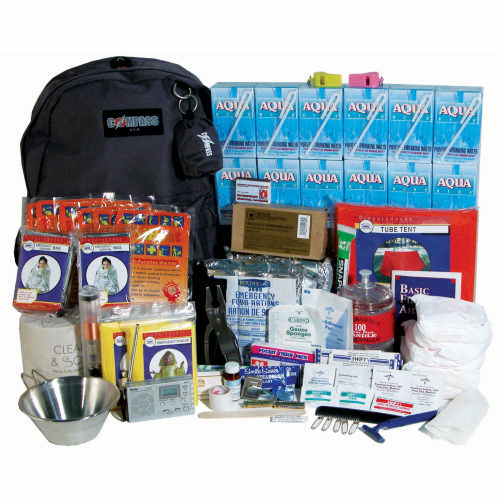
Local and national government have done well preparing for and responding to local disasters such as earthquake and flood. Hurricane Katrina was actually a regional disaster involving 4 US states and exceeded the US's ability to respond. Therefore, it was a true disaster by definition. That said, many other disasters such as earthquake or forest fire are more local in extent. Therefore, local and national governments have the resources to respond in a timely manner. However, even the most timely response, aide may not reach you for up to 72 hours. So, the best preparation for a local catastrophe is a 72-hour kit.
A 72-hour kit is placed in 2-3 duffle bags or backpacks that can be picked up and carried at a moments notice. It should contain food, water purification, medical essentials, radio, and other essentials for keeping warm and dry for 3 days until outside help can arrive. It is also important to bring important papers with you such as title to home, cars, etc.
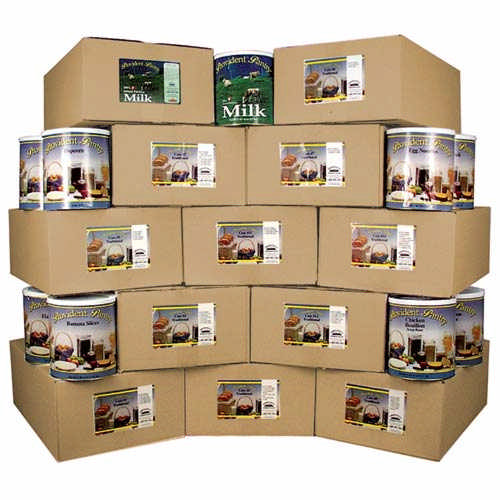
Regional and global catastrophes are true disasters. These have such a wide area of effect that no government could adequately prepare. That said, individuals can effectively and economically prepare for these broader threats. Such disasters may not directly cause harm but have such broad effects generally that there are disruptions of transportation, utilities, and the economy. In such instances, having a supply of food stuffs to preserve life for 1 year is the best manner of preparation. This involves the storage of commodities such as wheat, beans, rice, oil, sugar, powdered milk, and medicines. Stockpiling canned food is very inefficient. Canned food is mostly water. Dry-pack storage of wheat, beans, rice is the most economical, efficient, and effective way to store food. To learn how to create an emergency food storage go to
http://www.providentliving.org/ and
http://www.emergencyessentials.com/.
 Dr. David Sunwall, Director of the Utah Health Department, notified my Father and I about a great Article in the New York Times "Hospitals Short on Ventilators if Bird Flu Hits ." This article addresses the problem of a ventilator shortage during a pandemic and his numbers agree well with our estimates. The article mentions the Vortran Automatic Resuscitator as a cheap and efficient example of a vent that could be stockpiled and used during a disaster or pandemic (http://www.vortran.com/automatic-resuscitator.htm). This vent is purely pressure controlled and seems to operate akin to the magnet and bobbin "minivent" described in Anesthesia ( Cohen AD, The minivent respirator. Anesthesia. 1966 Oct; 21(4):563-8). The vent doesn't generate the optimal pressure/volume curve for ARDS, but hey, it only cost 50$.